Understanding Load Calculations | Structural Design

Load Calculations | Design of Buildings

In our earlier article, we discussed “Different types of loads” and their importance in Structural design.

Now we will move on with our further discussion on the following points:

  • Design principle assumption and notation assumed
  • Design Constant
  • Assumptions regarding Design
  • Loads on Beams
  • Loads on slabs

Design principle assumption and notation assumed:

The notations adopted throughout are same as given in IS:456:2000

Density of material used in accordance with reference to IS:857-1987s

Sr.no Material Density
1 Plain concrete 24 KN/m3
2 Reinforced cement concrete 25 KN/m3
3 Flooring material (cement mortar) 1.00 KN/m3
4 Brick masonry 19 KN/m3

Design constant

Using M20 and Fe415 grade of concrete and steel respectively for columns and footings

Therefore:

Fck – i. e. Characteristic strength for M15 – 15 N/mm2

Fck – i. e. Characteristic strength for M15 – 15 N/mm2

Fck – i. e. Characteristic strength for M20 – 20 N/mm2

Fy – i. e. Characteristic strength for steel – 415 N/mm2
Read more

Introduction to the calculation of the loads | Building Construction

Load Calculations | Types of Loads

Students find it difficult to understand the concept of loads although it is a very simple concept. We are going to write a series of articles on “Load Calculations” and help you all in understanding different types of loads that are to be considered for structural designing and also how to calculate them.

In this article, we will discuss different types of loads with examples.

In our next article, we will cover the following points:

An object is subject to mainly two types of forces:

  1. Live loads
  2. Dead loads

Basically, an object subject to any type of force which could be gravitational force (weight), pressure or anything affects the object is called a load.

This concept is used in Mechanical and structural engineering. Let’s take in terms of Structural Engineering. Whenever a structure is designed, these concepts are taken into consideration because real world objects are analyzed in order to design the structure. This is very important in terms of structural stability.

What are “Dead loads”?

As the name itself suggests, dead loads could be termed as self weight of the non-living objects. It could be the weight of the materials, equipments or any other components in the structure that will remain permanent throughout the life of the structure.

Dead load has to be considered in order to make the structural design accordingly. Dead loads vary from structure to structure. Every building is unique and has different considerations.

An additional load is considered in case additional forces build up in a structure in case of settlement or due to secondary effects of pre-stress construction or due to shrinkage of concrete.

Read more

Fly ash Bricks | Building Materials and Construction

Fly ash Bricks | An alternative Building Material

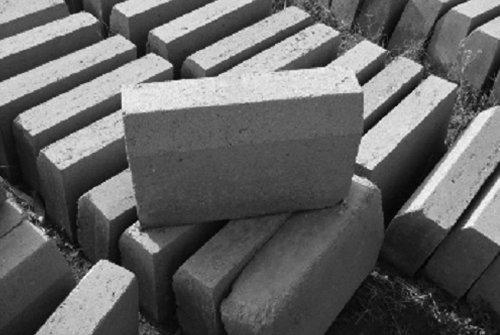
Fly ash bricks are masonry units that are used in the construction of buildings. They are considered to be a part of good and affordable building materials. They contain Class C fly ash and water.

Fly ash bricks are made by compressing Class C fly ash and water at 4000psi and then curing is carried on for 24 hours at a temperature of 66 degrees Celsius steam bath. Air entrainment agent is used to toughen the bricks.

Fly ash Bricks
Fly ash Bricks

Since the concentration of calcium oxide is very high in class C fly ash, the brick is described as self cementing.

It is considered to be a good alternative to traditional mud bricks since the method of manufacture of fly ash is energy efficient that is it helps save energy, brings about reduction of mercury pollution and plus it is cost effective.

Raw materials used for the manufacture of Fly ash Bricks:

  • Fly ash – which is the primary ingredient
  • Sand or Stone dust – as fine aggregate
  • Lime – source of calcium carbonate which results in the bricks being called “Self-cementing bricks”.
  • Gypsum – to enhance the fineness of the shape of the bricks
  • Cement – to increase bonding and strength